
PROJECT BRIEF
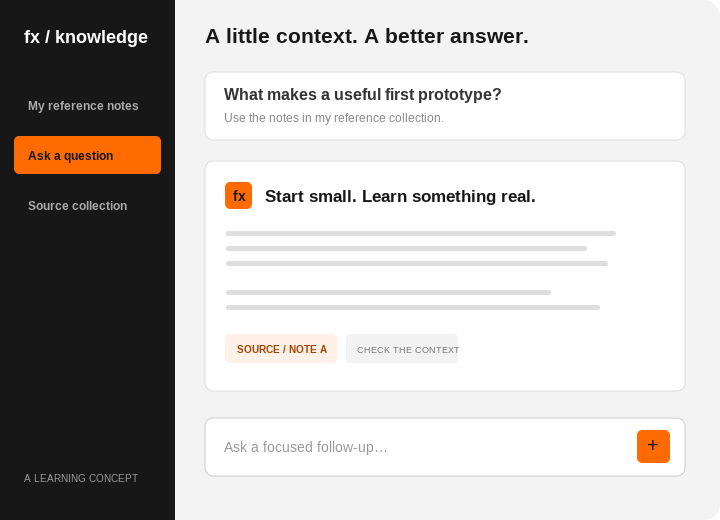
A knowledge assistant
Turn a small set of notes into answers you can trace back to their source.
Explore the project briefFrame language tasks, work with useful context, and evaluate an assistant against clear expectations.
Choose a narrow language task, such as turning a short note into a checklist. Specify the audience, useful context, and the form of a good answer. Include a case where asking a question is better than guessing.
What you’ll leave with: A task specification and examples.
Prepare a small set of reference notes you can review yourself. Decide which source is relevant to a question and how an answer should point back to it. Keep source material distinct from instructions about the assistant’s role.
What you’ll leave with: A small reference set and a context selection rule.
Help the reader distinguish supported information from uncertainty. Define a format that makes the answer easy to check. Test what happens with missing context, conflicting notes, or material that tries to give unrelated instructions.
What you’ll leave with: A response template and a fallback behaviour.
A useful prototype needs a repeatable way to notice regressions. Test ordinary questions alongside ambiguous and unanswerable ones. Review the source selection and the final answer separately so you can locate the failure.
What you’ll leave with: A prototype evaluation and improvement plan.
You’ve marked every module complete. Download your plan, revisit an experiment, or use what you learned to explore a project brief.
Turn a small set of notes into answers you can trace back to their source.
Explore the project brief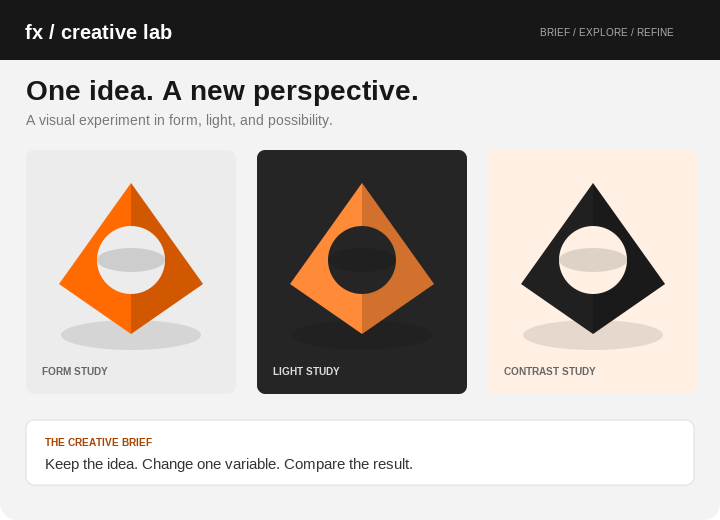
Take one visual idea from a clear brief to a considered, documented result.
Explore the project brief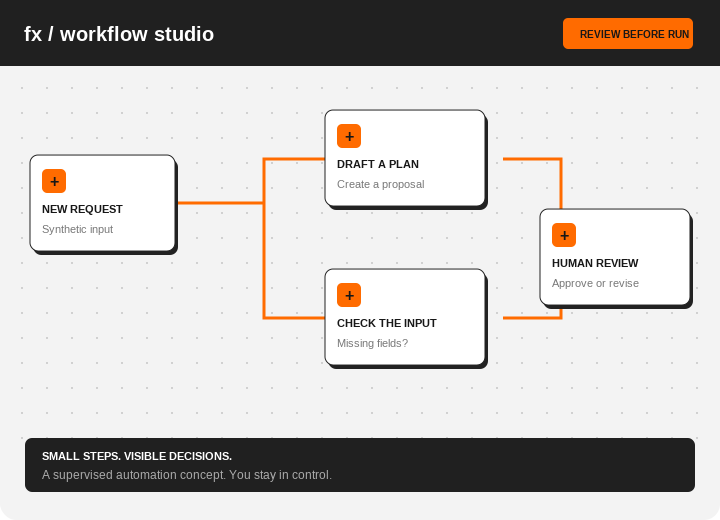
Prototype a useful workflow with clear boundaries and a person in control.
Explore the project briefIllustrative project briefs for your own experiments. These are starting points, not examples of completed member work.