
PROJECT BRIEF
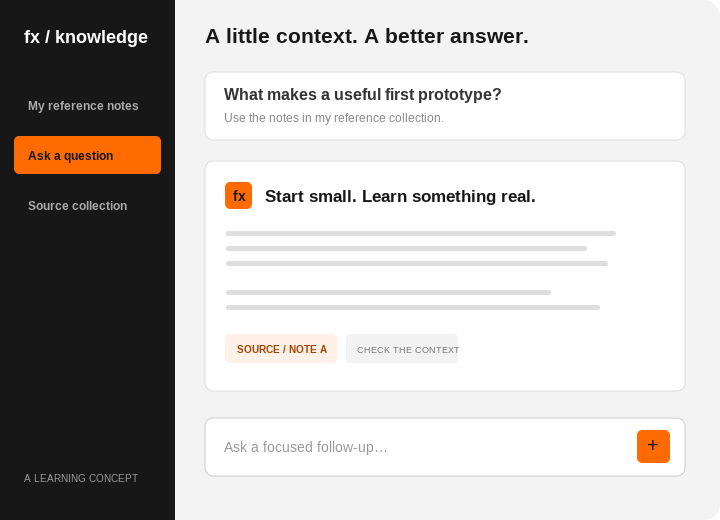
A knowledge assistant
Turn a small set of notes into answers you can trace back to their source.
Explore the project briefMap a workflow, define tool boundaries, and build a small supervised automation you can inspect.
Start with a process you understand. Separate predictable steps from decisions that need judgement. Choose a low-impact, reversible task for your first experiment and use synthetic information while learning.
What you’ll leave with: A workflow map with a narrow first scope.
Treat each tool as a small, well-defined capability. Describe the inputs it accepts, the result it returns, and the conditions under which it should refuse to act. Give the workflow only the access it needs.
What you’ll leave with: A bounded tool interface.
Show a proposed action before any consequential change. Make it easy to understand why the action was suggested, what information it uses, and how to reject it. An explicit review point is especially useful while a prototype is changing.
What you’ll leave with: A reviewable action proposal.
Try missing fields, duplicate requests, tool failures, and interrupted runs. Record what happened so a person can investigate. Decide when the workflow should retry, stop, or ask for help rather than continue silently.
What you’ll leave with: A supervised prototype with a failure log.
You’ve marked every module complete. Download your plan, revisit an experiment, or use what you learned to explore a project brief.
Turn a small set of notes into answers you can trace back to their source.
Explore the project brief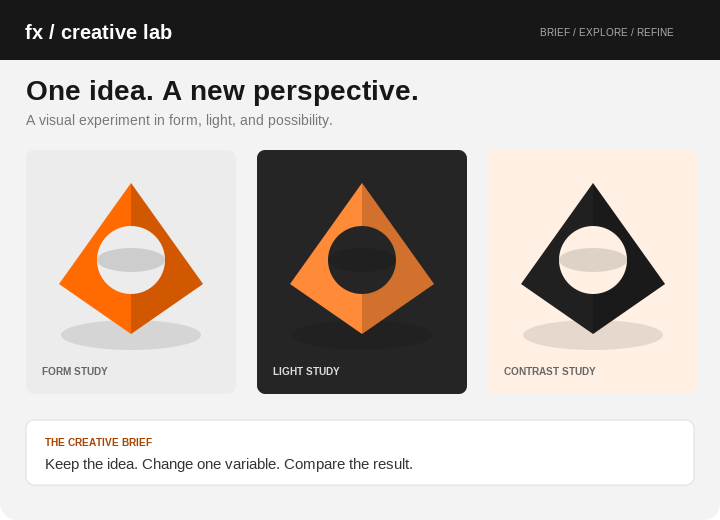
Take one visual idea from a clear brief to a considered, documented result.
Explore the project brief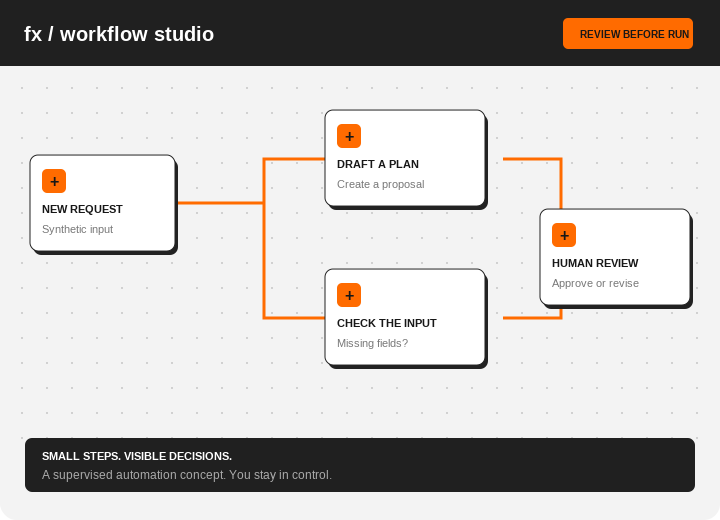
Prototype a useful workflow with clear boundaries and a person in control.
Explore the project briefIllustrative project briefs for your own experiments. These are starting points, not examples of completed member work.